Category Archives: Neurology

The perception of time

In the post “What is the nature of time?” the essence of time has been analyzed from the point of view of physics. Several conclusions have been drawn from it, which can be summarized in the following points:

  • Time is an observable that emerges at the classical level from quantum reality.
  • Time is determined by the sequence of events that determines the dynamics of classical reality.
  • Time is not reversible, but is a unidirectional process determined by the sequence of events (arrow of time), in which entropy grows in the direction of the sequence of events. 
  • Quantum reality has a reversible nature, so the entropy of the system is constant and therefore its description is an invariant.
  • The space-time synchronization of events requires an intimate connection of space-time at the level of quantum reality, which is deduced from the theory of relativity and quantum entanglement.

Therefore, a sequence of events can be established which allows describing the dynamics of a classical system (CS) in the following way:

CS = {… Si-2, Si-1, Si, Si+1, Si+2,…}, where Si is the state of the system at instant i.

This perspective has as a consequence that from a perceptual point of view the past can be defined as the sequence {… S-2, S-1}, the future as the sequence {S+1, S+2,…} and the present as the state S0.

At this point it is important to emphasize that these states are perfectly distinguishable from a sequential conception (time) since the amount of information of each state, determined by its entropy, verifies that:

  H(Si) < H(Si+1) [1].

Therefore, it seems necessary to analyze how this sequence of states can be interpreted by an observer, the process of perception being a very prominent factor in the development of philosophical theories on the nature of time.

Without going into the foundation of these theories, since we have exhaustive references on the subject [2], we will focus on how the sequence of events produced by the dynamics of a system can be interpreted from the point of view of the mechanisms of perception [3] and from the perspective currently offered by the knowledge on Artificial Intelligence (AI) [4].

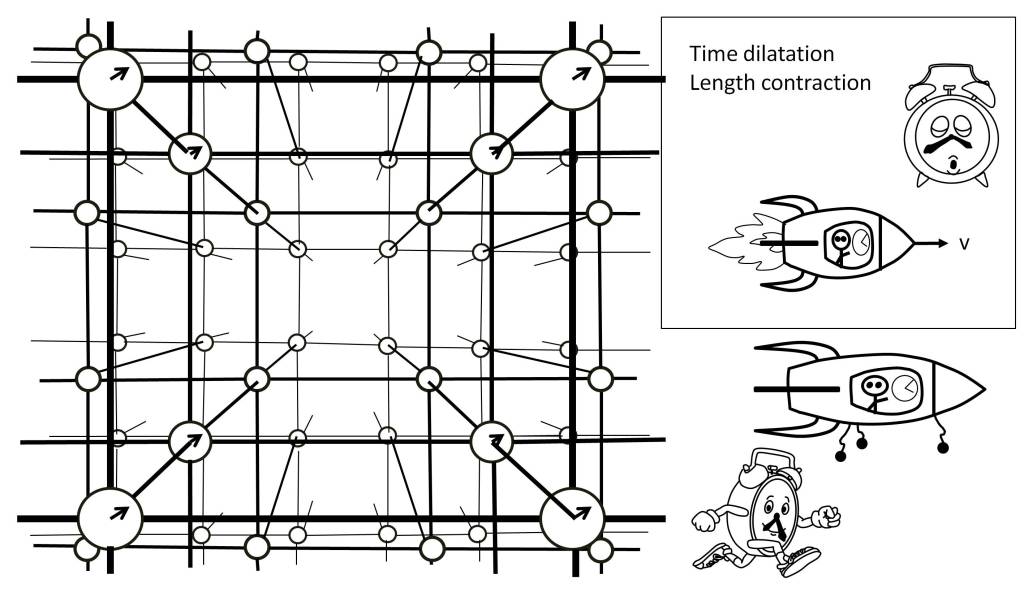
Nevertheless, let us make a brief note on what physical time means. According to the theory of relativity, space-time is as if in a vacuum there were a network of clocks and rules of measurement, forming a reference system, in such a way that its geometry depends on the gravitational effects and the relative velocity of the observer’s own reference system. And it is at this point where we can scale in the interpretation of time if we consider the observer as a perceptive entity and establish a relationship between physics and perception.
The physical structure of space-time

What we are going to discuss next is whether the sequence of states {… S-2, S-1, S0, S+1, S+2,…} is a physical reality or, on the contrary, is a purely mathematical construction, such that the concept of past, present and future is exclusively a consequence of the perception of this sequence of states. Which means that the only physical reality would be the state of the system S0, and that the sequences {… S-2, S-1} and {S+1, Si+2,…} would be an abstraction or fiction created by the mathematical model.

The contrast between these two views has an immediate consequence. In the first case, in which the sequence of states has physical reality, the physical system would be formed by the set of states {… S-2, S-1, S0, S+1, S+2,…}, which would imply a physical behavior different from the observed universe, which would reinforce the strictly mathematical nature of the sequence of states.

In the second hypothesis there would only be a physical reality determined by the state of the system S0, in such a way that physical time would be an emergent property, consequence of the entropy difference between states that would differentiate them and make them observable.

This conception must be consistent with the theory of relativity, which is possible if we consider that one of the consequences of its postulates is the causality of the system, so that the sequence of events is the same in all reference systems, regardless of the fact that the space-time geometry is different in each of them and therefore the emergent space-time magnitudes are different.

At this point one could posit as fundamental postulates of the theory of relativity the invariance of the sequence of events and covariance. But this is another subject.

Past , present and future

From this physical conception of space-time, the question that arises is how this physical reality determines or conditions an observer’s perception of time.

Thus, in the post “the predictive brain” the ability of neural tissue to process time, which allows higher living beings to interact with the environment, has been indirectly discussed. This requires not only establishing space-time models, but also making space-time predictions [5]. Thus, time perception requires discriminating time intervals of the order of milliseconds to coordinate in real time the stimuli produced by the sensory organs and the actions to activate the motor organs. The performance of these functions is distributed in the brain and involves multiple neural structures, such as the basal ganglia, cerebellum, hippocampus and cerebral cortex [6] [7].

To this we must add that the brain is capable of establishing long-term timelines, as shown by the perception of time in humans [8], in such a way that it allows establishing a narrative of the sequence of events, which is influenced by the subjective interest of those events.

This indicates that when we speak generically of “time” we should establish the context to which we refer. Thus, when we speak of physical time we would be referring to relativistic time, as the time that elapses between two events and that we measure by means of what we define as a clock.

But when we refer to the perception of time, a perceptual entity, human or artificial, interprets the past as something physically real, based on the memory provided by classical reality. But such reality does not exist once the sequence of events has elapsed, since physically only the state S0 exists, so that the states Si, i<0, are only a fiction of the mathematical model. In fact, the very foundation of the mathematical model shows, through chaos theory [9], that it is not possible to reconstruct the states Si, i<0, from S0. In the same way it is not possible to define the future states, although here an additional element appears determined by the increase of the entropy of the system.

With this, we are hypothesizing that the classical universe is S≡S0, and that the states Si, i≠0 have no physical reality (another thing is the quantum universe, which is reversible, so all its states have the same entropy! Although at the moment it is nothing more than a set of mathematical models). Colloquially, this would mean that the classical universe does not have a repository of Si states. In other words, the classical universe would have no memory of itself.

Thus, it is S that supports the memory mechanisms and this is what makes it possible to make a virtual reconstruction of the past, giving support to our memories, as well as to areas of knowledge such as history, archeology or geology. In the same way, state S provides the information to make a virtual construction of what we define as the future, although this issue will be argued later. Without going into details, we know that in previous states we have had some experiences that we store in our memory and in our photo albums.

Therefore, according to this hypothesis it can be concluded that the concepts of past and future do not correspond to a physical reality, since the sequences of states {… S-2, S-1} and {S+1, S+2,…}  have no physical reality, since they are only a mathematical artifact. This means that the concepts of past and future are virtual constructs that are materialized on the basis of the present state S, through the mechanisms of perception and memory. The arising question that we will try to answer is the one about how the mechanisms of perception construct these concepts.

Mechanisms of perception

Natural processes are determined by the dynamics of the system in such a way that, according to the proposed model, there is only what we define as present state S. Consequently, if the past and the future have no physical reality, it is worth asking whether plants, inanimate beings are aware of the passage of time.

It is obvious that for humans the answer is yes, otherwise we would not be talking about it. And the reason for this is the information about the past contained in the state S. But this requires the existence of information processing mechanisms that make it possible to virtually construct the past. Similarly, these mechanisms may allow the construction of predictions about future states that constitute the perception of the future [10].

For this, the cognitive function of the brain requires the coordination of neural activity at different levels, from neurons, neural circuits, to large-scale neural networks [7]. As an example of this, the post “The predictive brain” highlights the need to coordinate the stimuli perceived by the sensory organs with the motor organs, in order to be able to interact with the environment. Not only that, but it is essential for the neural tissue to perform predictive processing functions [5], thus overcoming the limitations caused by the response times of neurons.

As already indicated, the perception of time involves several neural structures, which allow the measurement of time at different scales. Thus, the cerebellum allows establishing a time base on the scale of tens of milliseconds [11], analogous to a spatiotemporal metric. Since the dynamics of events is something physical that modifies the state of the system S, the measurement of these changes by the brain requires a physical mechanism that memorizes these changes, analogous to a delay line, which seems to be supported by the cerebellum.

However, this estimation of time cannot be considered at the psychological level as a high-level perceptual functionality, since it is only effective within very short temporal windows, necessary for the performance of functions of an automatic or unconscious nature. For this reason, one could say that time as a physical entity is not perceived by the brain at the conscious level. Thus, what we generally define as time perception is a relationship between events that constitute a story or narrative. This involves processes of attention, memory and consciousness supported in a complex way, involving structures from the basal ganglia to the cerebral cortex, with links between temporal and non-temporal perception mechanisms [12] [13].

Given the complexity of the brain and the mechanisms of perception, attention, memory and self-awareness, it is not possible, at least for the time being, to understand in detail how humans construct temporal stories. Fortunately, we now have AI models that allow to understanding how this can be possible and how stories and narratives can be constructed from the sequential perception of daily life events. A paradigmatic example of this are the “Large Language Models” (LLMs), which based on natural language processing (NLP) techniques and neural networks, are capable of understanding, summarizing, generating and predicting new content and which raise the debate on whether human cognitive capabilities could emerge in these generic models, if provided with sufficient processing resources and training data [14].

Without delving into this debate, today anyone can verify through this type of applications (ChatGPT, BARD, Claude, etc.) how a completely consistent story can be constructed, both in its content and in its temporal plot, from the human experiences reflected in written texts with which these models have been trained.

Taking these models as a reference provides solid evidence on perception in general and on the perception of time in particular. However, it should be noted that these models also show how new properties emerge in their behavior as their complexity grows [15]. This gives a clue as to how new perceptual capabilities or even concepts such as self-awareness may emerge, although this last term is purely speculative, and that in the event that this ends up being the case, it raises the problem discussed in the post “Consciousness from the AI point of view” concerning how to know that an entity is self-aware.

But returning to the subject at hand, what is really important from the point of view of the perception of the passage of time is how the timeline of stories or narratives is a virtual construction that transcends physical time. Thus, the chronological line of events does not refer to a measure of physical time, but is a structure in which a hierarchy or order is established in the course of events.
Virtual perception of time

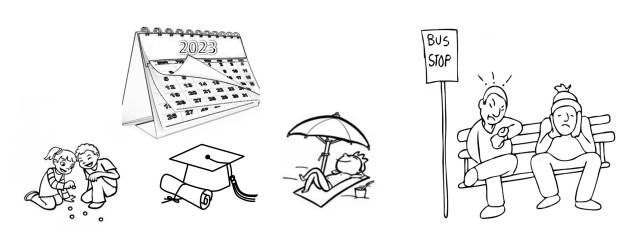
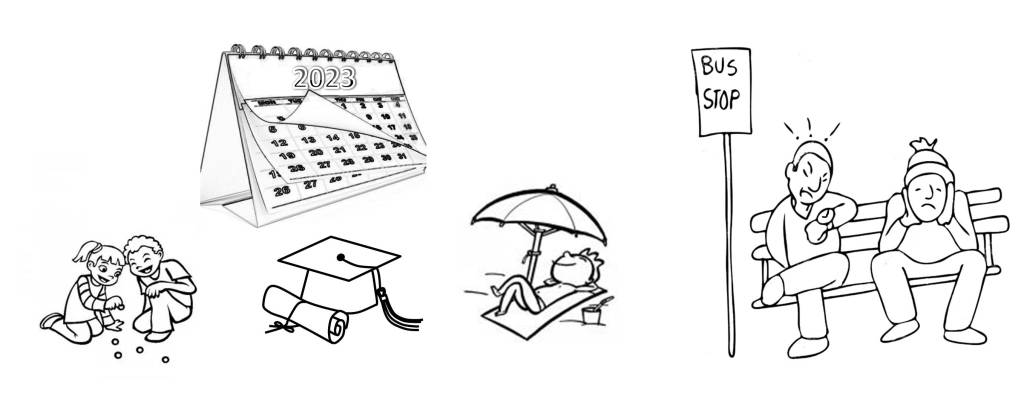
It can therefore be concluded that the brain only needs to measure physical time in the very short term, in order to be able to interact with the physical environment. But from this point on, all that is needed is to establish a chronological order without a precise reference to physical time. Thus we can refer to an hour, day, month, year, or a reference to another event as a way of ordering events, but always within a purely virtual context. This is one of the reasons for how the passage of time is perceived, so that virtual time will be extended according to the amount of information or relevance of events, something that is evident in playful or stressful situations [16].

Conclusions

The first conclusion that results from the above analysis is the existence of two conceptions of time. One is the one related to physical time that corresponds to the sequence of states of a physical system and the other is the one corresponding to the stimuli produced by this sequence of states on a perceptual intelligence.

Both concepts are elusive when it comes to understanding them. We are able to measure physical time with great precision. However, the theory of relativity shows space-time as an emergent reality that depends on the reference system. On the other hand, the synchronization of clocks and the establishment of a space-measuring structure may seem somewhat contrived, oriented simply to the understanding of space-time from the point of view of physics. On the other hand, the compression of cognitive processes still has many unknowns, although new developments in AI allow us to intuit its foundation, which sheds some light on the concept of psychological time.

The interpretation of time as the sequence of events or states occurring within a reference system is consistent with the theory of relativity and also allows for a simple justification of the psychological perception of time as a narrative.

The hypothesis that the past and the future have no physical reality and that, therefore, the universe keeps no record of the sequence of states, supports the idea that these concepts are an emergent reality at the cognitive level, so that the conception of time at the perceptual level would be based on the information contained in the current state of the system, exclusively. 

From the point of view of physics this hypothesis does not contradict any physical law. Moreover, it can be considered fundamental in the theory of relativity, since it assures a causal behavior that would solve the question of temporal irreversibility and the impossibility of traveling both to the past and to the future. Moreover, invariance in the time sequence supports the concept of causality, which is fundamental for the emergent system to be logically consistent.

References

[1]F. Schwabl, Statistical Mechanics, pp. 491-494, Springer, 2006.
[2]N. Emery, N. Markosian y M. Sullivan, «”Time”, The Stanford Encyclopedia of Philosophy (Winter 2020 Edition), Edward N. Zalta (ed.), URL = <https://plato.stanford.edu/archives/win2020/entries/time/&gt;,» [En línea].
[3]E. R. Kandel, J. H. Schwartz, S. A. Siegenbaum y A. J. Hudspeth, Principles of Neural Science, The McGraw-Hill, 2013.
[4]F. Emmert-Streib, Z. Yang, S. Tripathi y M. Dehmer, «An Introductory Review of Deep Learning for Prediction Models With Big Data,» Front. Artif. Intell., 2020.
[5]W. Wiese y T. Metzinger, «Vanilla PP for philosophers: a primer on predictive processing.,» In Philosophy and Predictive Processing. T. Metzinger &W.Wiese, Eds., pp. 1-18, 2017.
[6]J. Hawkins y S. Ahmad, «Why Neurons Have Tousands of Synapses, Theory of Sequence Memory in Neocortex,» Frontiers in Neural Circuits, vol. 10, nº 23, 2016.
[7]S. Rao, A. Mayer y D. Harrington, «The evolution of brain activation during temporal processing.,» Nature Neuroscience, vol. 4, p. 317–323, 2001.
[8]V. Evans, Language and Time: A Cognitive Linguistics Approach, Cambridge University Press, 2013.
[9]R. Bishop, «Chaos: The Stanford Encyclopedia of Philosophy, Edward N. Zalta (ed).,» Bishop, Robert, “Chaos”, The Stanford Encyclopedia of Philosophy (Spring 2017 Edition), Edward N. Zalta (ed.), 2017. [En línea]. Available: https://plato.stanford.edu/archives/spr2017/entries/chaos/. [Último acceso: 7 9 2023].
[10]A. Nayebi, R. Rajalingham, M. Jazayeri y G. R. Yang, «Neural Foundations of Mental Simulation: Future Prediction of Latent Representations on Dynamic Scenes,» arXiv.2305.11772v2.pdf, 2023.
[11]R. B. Ivry, R. M. Spencer, H. N. Zelaznik y J. Diedrichsen, «Ivry, Richard B., REBECCA M. Spencer, Howard N. Zelaznik and Jörn Diedrichsen. The Cerebellum and Event Timing,» Ivry, Richard B., REBECCA M. Spencer, Howard N. Zelaznik and Jörn DiedrichAnnals of the New York Academy of Sciences, vol. 978, 2002.
[12]W. J. Matthews y W. H. Meck, «Temporal cognition: Connecting subjective time to perception, attention, and memory.,» Psychol Bull., vol. 142, nº 8, pp. 865-907, 2016.
[13]A. Kok, Functions of the Brain: A Conceptual Approach to Cognitive Neuroscience, Routledge, 2020.
[14]J. Wei, Y. Tay, R. Bommasani, C. Raffel, B. Zoph, S. Borgeaud, D. Yogatama, M. Bosma, D. Zhou, D. Metzler, E. H. Chi, T. Hashimoto, O. Vinyals, P. Liang, J. Dean y W. Fedus, «Emergent Abilities of Large Language Models,» Transactions on Machine Learning Research. https://openreview.net/forum?id=yzkSU5zdwD, 2022.
[15]T. Webb, K. J. Holyoak y H. Lu, «Emergent Analogical Reasoning in Large Language Models,» Nature Human Behaviour, vol. 7, p. 1526–1541, 3 8 2023.
[16]P. U. Tse, J. Intriligator, J. Rivest y P. Cavanagh, «Attention and the subjective expansion of time,» Perception & Psychophysics, vol. 66, pp. 1171-1189, 2004.

The predictive brain

While significant progress has been made in the field of neuroscience and in particular in the neural circuits that support perception and motor activity, the understanding of neural structures, how they encode information, and establish the mechanisms of learning is still under investigation.

Digital audio and image processing techniques and advances in artificial intelligence (AI) are a source of inspiration for understanding these mechanisms. However, it seems clear that these ideas are not directly applicable to brain functionality.

Thus, for example, the processing of an image is static, since digital sensors provide complete images of the scene. In contrast, the information encoded by the retina is not homogeneous, with large differences in resolution between the fovea and the surrounding areas, so that the image composition is necessarily spatially segmented.

But these differences are much more pronounced if we consider that this information is dynamic in time. In the case of digital video processing, it is possible to establish a correlation of the images that make up a sequence. A correlation that in the case of the visual system is much more complex, due to the spatial segmentation of the images and how this information is obtained using the saccadic movements of the eyes.

The information generated by the retina is processed by the primary visual cortex (V1) which has a well-defined map of spatial information and also performs simple feature recognition functions. This information progresses to the secondary visual cortex (V2) which is responsible for composing the spatial information generated by saccadic eye movement.

This structure has been the dominant theoretical framework, in what has been termed the hierarchical feedforward model [1]. However, certain neurons in V1 and V2 regions have been found to have a surprising response. They seem to know what is going to happen in the immediate future, activating as if they could perceive new visual information without it having been produced by the retina [2], in what is defined as Predictive Processing (PP)  [3], and which is gaining influence in cognitive neuroscience, although it is criticized for lacking empirical support to justify it.

For this reason, the aim of this post is to analyze this behavior from the point of view of signal processing techniques and control systems, which show that the nervous system would not be able to interact with the surrounding reality unless it performs PP functions.

A brief review of control systems

The design of a control system is based on a mature technique [4], although the advances in digital signal processing produced in the last decades allow the implementation of highly sophisticated systems. We will not go into details about these techniques and will only focus on the aspects necessary to justify the possible PP performed by the brain.

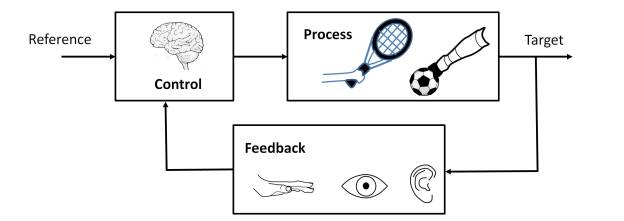
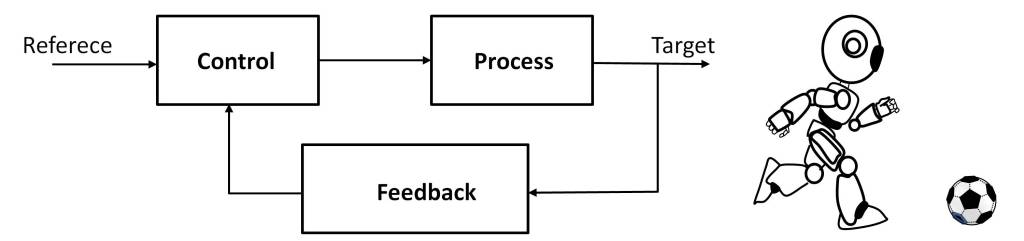
Thus, a closed-loop control system is composed of three fundamental blocks:

  • Feedback: This block determines the state of the target under control.
  • Control: Determines the actions to be taken based on the reference and the information on the state of the target.
  • Process: Translates the actions determined by the control to the physical world of the target.

The functionality of a control system is shown in the example shown in the figure. In this case the reference is the position of the ball and the target is for the robot to hit the ball accurately.

The robot sensors must determine in real-time the relative position of the ball and all the parameters that define the robot structure (feedback). From these, the control must determine the robot motion parameters necessary to reach the target, generating the control commands that activate the robot’s servomechanisms.

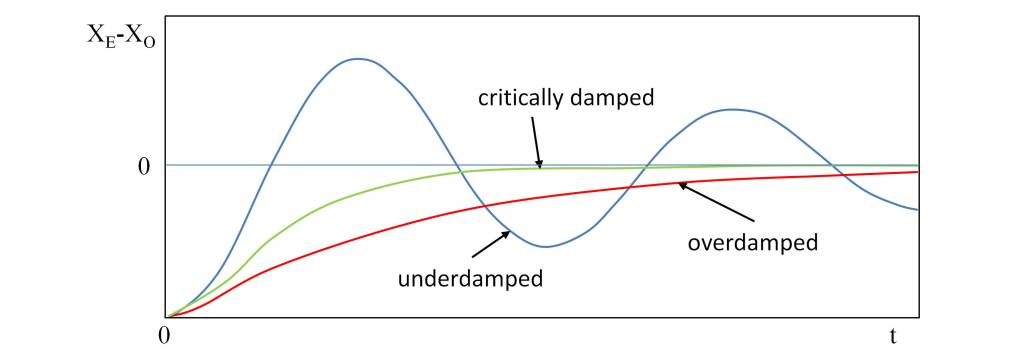
The theoretical analysis of this functional structure allows determining the stability of the system, which establishes its capacity to correctly develop the functionality for which it has been designed. This analysis shows that the system can exhibit two extreme cases of behavior. To simplify the reasoning, we will eliminate the ball and assume that the objective is to reach a certain position.

In the first case, we will assume that the robot has a motion capability such that it can perform fast movements without limitation, but that the measurement mechanisms that determine the robot’s position require a certain processing time Δt. As a consequence, the decisions of the control block are not in real-time since the decisions at t = ti actually correspond to t = ti-Δt, where Δt is the time required to process the information coming from the sensing mechanisms. Therefore, when the robot approaches the reference point the control will make decisions as if it were somewhat distant, which will cause the robot to overshoot the position of the target. When this happens, the control should correct the motion by turning back the robot’s trajectory. This behavior is defined as an underdamped regime.

Conversely, if we assume that the measurement system has a fast response time, such that Δt≊0, but that the robot’s motion capability is limited, then the control will make decisions in real-time, but the approach to the target will be slow until the target is accurately reached. Such behavior is defined as an overdamped regime.

At the boundary of these two behaviors is the critically damped regime that optimizes the speed and accuracy to reach the target. The behavior of these regimes is shown in the figure.

Formally, the above analysis corresponds to systems in which the functional blocks are linear. The development of digital processing techniques allows the implementation of functional blocks with a nonlinear response, resulting in much more efficient control systems in terms of response speed and accuracy. In addition, they allow the implementation of predictive processing techniques using the laws of mechanics. Thus, if the reference is a passive entity, its trajectory is known from the initial conditions. If it is an active entity, i.e. it has internal mechanisms that can modify its dynamics, heuristic functions, and AI can be used  [5].

The brain as a control system

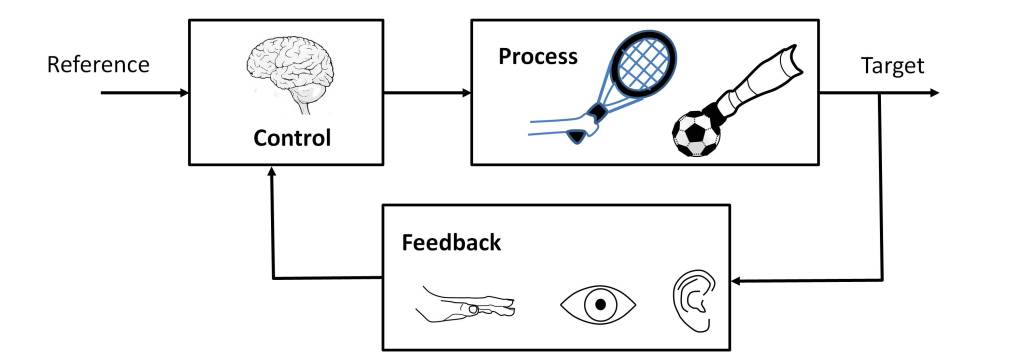
As the figure below shows, the ensemble formed by the brain, the motor organs, and the sensory organs comprises a control system. Consequently, this system can be analyzed with the techniques of feedback control systems.

For this purpose, it is necessary to analyze the response times of each of the functional blocks. In this regard, it should be noted that the nervous system has a relatively slow temporal behavior [6]. Thus, for example, the response time to initiate movement in a 100-meter sprint is 120-165 ms. This time is distributed in recognizing the start signal, the processing time of the brain to interpret this signal and generate the control commands to the motor organs, and the start-up of these organs. In the case of eye movements toward a new target, the response time is 50-200 ms. These times give an idea of the processing speed of the different organs involved in the different scenarios of interaction with reality.

Now, let’s assume several scenarios of interaction with the environment:

  • A soccer player intending to hit a ball moving at a speed of 10 km/hour. In a time of 0.1 s. the ball will have moved 30 cm. 
  • A tennis player who must hit a ball moving at 50 km/hour. In a time of 0.1 s. the ball will have displaced 150 cm. 
  • Grip a motionless cup by moving the hand at a speed of 0.5 m/s. In a time of 0.1 s. the hand will have moved 5 cm.

These examples show that if the brain is considered as a classical control system, it is practically impossible to obtain the necessary precision to justify the behavior of the system. Thus, in the case of the soccer player, the information obtained by the brain from the sensory organs, in this case, the sight, will be delayed in time, providing a relative position of the foot concerning the ball with an error of the order of centimeters, so that the ball strike will be very inaccurate.

The same reasoning can be made in the case of the other two proposed scenarios, so it is necessary to investigate the mechanisms used by the brain to obtain an accuracy that justifies its actual behavior, much more accurate than that provided by a control system based on the temporal response of neurons and nerve tissue.

To this end, let’s assume the case of grasping the cup, and let’s do a simple exercise of introspection. If we close our eyes for a moment we can observe that we have a precise knowledge of the environment. This knowledge is updated as we interact with the environment and the hand approaches the cup. This spatiotemporal behavior allows predicting with the necessary precision what will be the position of the hand and the cup at any moment, despite the delay produced by the nervous system.

To this must be added the knowledge acquired by the brain about space-time reality and the laws of mechanics. In this way, the brain can predict the most probable trajectory of the ball in the tennis player’s scenario. This is evident in the importance of training in sports activities since this knowledge must be refreshed frequently to provide the necessary accuracy. Without the above prediction mechanisms, the tennis player would not be able to hit the ball.

Consequently, from the analysis of the behavior of the system formed by the sensory organs, the brain, and the motor organs, it follows that the brain must perform PP functions. Otherwise, and as a consequence of the response time of the nervous tissue, the system would not be able to interact with the environment with the precision and speed shown in practice. In fact, to compensate for the delay introduced by the sensory organs and their subsequent interpretation by the brain, the brain must predict and advance the commands to the motor organs in a time interval that can be estimated at several tens of milliseconds.

The neurological foundations of prediction

As justified in the previous section, from the temporal response of the nervous tissue and the behavior of the system formed by the sensory organs, the brain, and the motor organs, it follows that the brain must support two fundamental functions: encoding and processing reference frames of the surrounding reality and performing Predictive Processing.

But what evidence is for this behavior? It has been known for several decades that there are neurons in the entorhinal cortex and hippocampus that respond to a spatial model, called grid cells [7]. But recently it has been shown that in the neocortex there are structures capable of representing reference frames and that these structures can render both a spatial map and any other functional structure needed to represent concepts, language, and structured reasoning [8].

Therefore, the question to be resolved is how the nervous system performs PP. As already advanced, PP is a disputed functionality because of its lack of evidence. The problem it poses is that the number of neurons that exhibit predictive behavior is very small compared to the number of neurons that are activated as a consequence of a stimulus.

The answer to this problem may lie in the model proposed by Jeff Hawkins and Subutai Ahmad [9] based on the functionality of pyramidal neurons [10], whose function is related to motor control and cognition, areas in which PP should be fundamental.

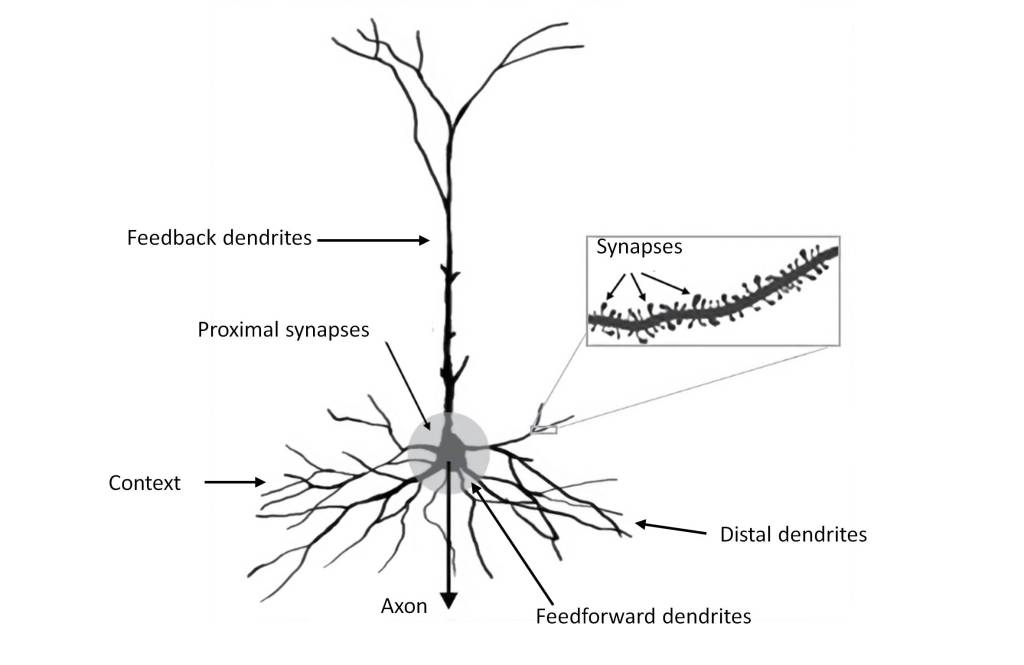
The figure below shows the structure of a pyramidal neuron, which is the most common type of neuron in the neocortex. The dendrites close to the cell body are called proximal synapses so that the neuron is activated if they receive sufficient excitation. The nerve impulse generated by the activation of the neuron propagates to other neurons through the axon, which is represented by an arrow.

This description corresponds to a classical view of the neuron, but pyramidal neurons have a much more complex structure. The dendrites radiating from the central zone are endowed with hundreds or thousands of synapses, called distal synapses so approximately 90% of the synapses are located on these dendrites. Also, the upper part of the figure shows dendrites that have a longer reach, which have feedback functionality.

The remarkable thing about this type of neuron is that if a group of synapses of a distal dendrite close to each other receives a signal at the same time, a new type of nerve impulse is produced that propagates along the dendrite until it reaches the body of the cell. This causes an increase in the voltage of the cell, but without producing its activation, so it does not generate a nerve impulse towards the axon. The neuron remains in this state for a short period, returning to its relaxed state.

The question is: What is the purpose of these nerve impulses from the dendrites if they are not powerful enough to produce cell activation? This has been an unknown that is intended to be solved by the model proposed by Hawkins and Ahmad [9], which proposes that the nerve impulses in the distal dendrites are predictions.

This means that a dendritic impulse is produced when a set of synapses close to each other on a distal dendrite receive inputs at the same time, and it means that the neuron has recognized a pattern of activity determined by a set of neurons. When the pattern of activity is detected, a dendritic impulse is created, which raises the voltage in the cell body, putting the cell into what we call a predictive state.

The neuron is then ready to fire. If a neuron in the predictive state subsequently receives sufficient proximal input to create an action potential to fire it, then the neuron fires slightly earlier than it would if the neuron were not in the predictive state.

Thus, the prediction mechanism is based on the idea that multiple neurons in a minicolumn [11] participate in the prediction of a pattern, all of them entering a prediction state, such that when one of them fires it inhibits the firing of the rest. This means that in a minicolumn hundreds or thousands of predictions are made simultaneously over a certain control scenario, such that one of the predictions will prevail over the rest, optimizing the accuracy of the process. This justifies the fact of the small number of predictive events observed versus the overall neuronal activity and also explains why unexpected events or patterns produce greater activity than more predictable or expected events.

If the neural structure of the minicolumns is taken into account, it is easy to understand how this mechanism involves a large number of predictions for the processing of a single pattern, and it can be said that the brain is continuously making predictions about the environment, which allows real-time interaction.

The PP from the point of view of AI

According to the above analysis, it can be concluded that the PP performed by the brain within a time window, of the order of tens of milliseconds, is fundamental for the interaction with the surrounding reality, synchronizing this reality with the perceived reality. But this ability to anticipate perceived events requires other mechanisms such as the need to establish reference frames as well as the ability to recognize patterns.

In the subject raised, it is evident the need to have reference frames in which objects can be represented, such as the dynamic position of the motor organs and of the objects with which to interact. In addition to this, the brain must be able to recognize such objects.

But these capabilities are common to all types of scenarios, although it is perhaps more appropriate to use the term model as an alternative to a reference frame since it is a more general concept. Thus, for example, in verbal communication, it is necessary to have a model that represents the structure of language, as well as an ability to recognize the patterns encoded in the stimuli perceived through the auditory system. In this case, the PP must play a fundamental role, since prediction allows for greater fluency in verbal communication, as is evident when there are delays in a communication channel. This is perhaps most evident in the synchronism necessary in musical coordination.

The enormous complexity of the nervous tissue and the difficulty to empirically identify these mechanisms can be an obstacle to understanding their behavior. For this reason, AI is a source of inspiration [12] since, using different neural network architectures, it shows how models of reality can be established and predictions can be made about this reality.

It should be noted that these models do not claim to provide realistic biological models. Nevertheless, they are fundamental mathematical models in the paradigm of machine learning and artificial intelligence and are a fundamental tool in neurological research. In this sense, it is important to highlight that PP is not only a necessary functionality for the temporal prediction of events, but as shown by artificial neural networks pattern recognition is intrinsically a predictive function.

This may go unnoticed in the case of the brain since pattern recognition achieves such accuracy that it makes the concept of prediction very diluted and appears to be free of probabilistic factors. In contrast, in the case of AI, mathematical models make it clear that pattern recognition is probabilistic in nature and practical results show a diversity of outcomes.

This diversity depends on several factors. Perhaps the most important is its state of development, which can still be considered very primitive, compared to the structural complexity, processing capacity, and energy efficiency of the brain. This means that AI applications are oriented to specific cases where it has shown its effectiveness, such as in health sciences [13] or in the determination of protein structures [14].

But without going into a deeper analysis of these factors, what can be concluded is that the functionality of the brain is based on the establishment of models of reality and the prediction of patterns, one of its functions being temporal prediction, which is the foundation of PP. 

References

[1]J. DiCarlo, D. Zoccolan y N. Rust, «How does the brain solve visual object recognition?,» Neuron, vol. 73, pp. 415-434, 2012.
[2]A. Clark, «Whatever next? Predictive brains, situated agents, and the future of cognitive science,» Behav. Brain Sci., vol. 34, p. 181–204, 2013.
[3]W. Wiese y T. Metzinger, «Vanilla PP for philosophers: a primer on predictive processing.,» In Philosophy and Predictive Processing. T. Metzinger &W.Wiese, Eds., pp. 1-18, 2017.
[4]G. F. Franklin, J. D. Powell y A. Emami-Naeini, Feedback Control of Dynamic Systems, Pearson; 8a edición, 2019.
[5]C. Su, S. Rakheja y H. Liu, «Intelligent Robotics and Applications,» de 5th International Conference, ICIRA, Proceedings, Part II, Montreal, QC, Canada, 2012.
[6]A. Roberts, R. Borisyuk, E. Buhl, A. Ferrario, S. Koutsikou, W.-C. Li y S. Soffe, «The decision to move: response times, neuronal circuits and sensory memory in a simple vertebrate,» Proc. R. Soc. B, vol. 286: 20190297, 2019.
[7]M. B. Moser, «Grid Cells, Place Cells and Memory,» de Nobel Lecture. Aula Medica, Karolinska Institutet, Stockholm, http://www.nobelprize.org/prizes/medicine/2014/may-britt-moser/lecture/, 2014.
[8]M. Lewis, S. Purdy, S. Ahmad y J. Hawkings, «Locations in the Neocortex: A Theory of Sensorimotor Object Recognition Using Cortical Grid Cells,» Frontiers in Neural Circuits, vol. 13, nº 22, 2019.
[9]J. Hawkins y S. Ahmad, «Why Neurons Have Tousands of Synapses, Theory of Sequence Memory in Neocortex,» Frontiers in Neural Circuits, vol. 10, nº 23, 2016.
[10]G. N. Elston, «Cortex, Cognition and the Cell: New Insights into the Pyramidal Neuron and Prefrontal Function,» Cerebral Cortex, vol. 13, nº 11, p. 1124–1138, 2003.
[11]V. B. Mountcastle, «The columnar organization of the neocortex,» Brain, vol. 120, p. 701–722, 1997.
[12]F. Emmert-Streib, Z. Yang, S. Tripathi y M. Dehmer, «An Introductory Review of Deep Learning for Prediction Models With Big Data,» Front. Artif. Intell., 2020.
[13]A. Bohr y K. Memarzadeh, Artificial Intelligence in Healthcare, Academic Press, 2020.
[14]E. Callaway, «‘It will change everything’: DeepMind’s AI makes gigantic leap in solving protein structures,» Nature, nº 588, pp. 203-204, 2020.